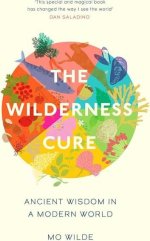
Mo Wilde (2022) The Wilderness Cure. Ancient Wisdom in a Modern World.

I tried to remember. Names in which the subject describe the object. Mo Wilde and Wilderness cure. In real life, we call these coincidences aptronyms. A tutor of Creative Writing I once had was, for example, called Elizabeth Reeder. Francine Prose, Reading Like a Writer is another example. Oscar Wilde’s (no relation to Mo Wilde) The Importance of Being Ernest played with that idea. A charactonym, loaded labels with hidden meaning, designed to...

"Do I Dare to Eat a Peach?"

Shiny new MacBook Neo highlighted that there were over 25,000 emails in my account. Many unread. Most not worth saving. At least one sender had died. J. Alfred Prufrock may have ‘measured out [his] life with coffee spoons’, but I have the measure of retired life deleting emails; redundancy, signing-on, year of college, allotment, pension, the coffee spoon path into retirement was right there. iCloud storage has been full for ages, so started a...

Can't Stand It (Warning: I am ranted)

Stood is the past tense and past participle of the verb to stand. Present participle: Standing, it’s standing. Sat is the past tense and past participle of the verb to sit. Present participle: Sitting, it’s sitting. I can’t stand it. Do people no longer care about language? Do they think they’re somehow ‘challenging the status quo’? Is it a particular form of fawning? That the internet and MSM are inveigled in this depressing state of affairs is...

Contemplation of Roses by Annest Gwilym: A Review by Ewan Lawrie

Contemplation of Roses I am very pleased to have been asked to write a review of long-time ABCTales member, Annest Gwilym’s latest poetry collection. Part I : is an almanac, with each poem representing a month of the year, running from April to March. Naturally, the first poem in this part is Spring: a vivid and colourful poem, split into two quatrains showing us what Spring isn’t, followed by an eight-line stanza of blank verse telling us what...

That Time of Year

Monday was warmly autumnal weather-wise; dotted cloudy-sunny, high winds, trees fluttering in constant prayer. ‘The Summer Book’ was a most calming film, beauty of nature and moss fanatics. While I was out, a spider had webbed right across the house gate, hedge to hedge. Later, a painted lady butterfly flew inside. Walked behind it down the stairs, in a Snow White moment, letting it fly out the front door. Was reminded of an anti-Snow White,...

Cathy Rentzenbrink (2021) Everyone is Still Alive.

The cover describes Cathy Rentzenbrink’s Everyone is Still Alive as ‘A Total Triumph’. Ah, that rare beast? A fictional triumph? Well, it almost failed my first 30 pages test-reading. It was OKish. A Magnolia Tree planted in Magnolia Road doesn’t quite have the same resonance as say A Tree in Harlem . Middle-class folk doing middle-class things. Ho-hum. The other problem I had was I’d read her latest fictional work first. Ordinary Time tells the...

Husks

During a toast-making lunchbreak in the great de-cluttering journey towards a calmer self, found a tail-end packet of psyllium husk in the bread bin. This means the rest is in an air-tight glass jar somewhere in the pantry. (Hopefully accurately labelled in chalk pen). Found myself asking why. What did I buy psyllium husk for in the first place, nevermind enough that it didn’t all fit into a single jar. No doubt, some magical longevity recipe...

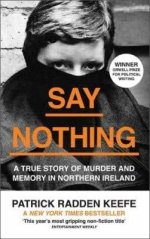
Patrick Radden Keefe (2018) Say Nothing

Patrick Radden Keefe (2018) Say Nothing is a book to savour. It won the National Book Critics Circle Award, Orwell Prize for Political Writing, and was named one of the New York Times 20 Best Books of the 21st Century. It’s not just a murder-mystery whodunit. But shows how money, power, and secrecy combine to warp memory and the idea of an authentic truth that can be picked up and put down again—and not just in Northern Ireland. Say Nothing...

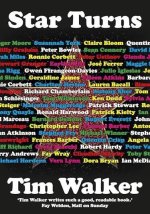
Tim Walker (2021) Star Turns.

I’d no idea who Tim Walker was or is, but because he writers for the Daily-hate-Mail and often works as a theatre critic, I’d stick him down as being a run-of-the mill and middle-class lad who done good for himself. His 71 pen portraits were mostly of people I knew, famous people. It helped that each interview had a photo. I could flip to that to see if I knew the face. Even with a photo, I didn’t remember who Antonia de Sancha was. Her...

Dead Letters: The Afflicted Areas

Filed by Fletcher Moody — Literary Correspondent In the fall of 1968 I set out to interview Wilma Dykeman, and the animals of the mountains would not let me arrive. She was the reason for the trip and I should say who she was, because she has never been as famous as the country she wrote about deserved. Thirteen years before, she had published The French Broad , a book that took a river and its whole watershed and the people strung along it and...

Pages