


III. The Body Box - Part One

By SoulFire77
- 485 reads
The truck was a Peterbilt and the cab smelled like coffee and diesel and one of those pine tree air fresheners that nobody believes in but everybody hangs. He had the heat on. The dashboard lights made the inside of the cab into a small orange world, and beyond the windshield there was nothing — just the highway and the dark and the broken line going under the hood at a speed that I could feel in my teeth.
I'd been standing on the shoulder for about twenty minutes before he pulled over. Cars had passed — four, maybe five, at that hour, most of them doing seventy or eighty, the headlights sweeping over me and then gone. I was wearing a man's windbreaker over a t-shirt and jeans I'd gotten from a donation bin at a Methodist church two counties back. The clothes didn't fit. Nothing fit. I don't mean that as a metaphor. I mean that every piece of fabric on my body was the wrong size and the wrongness was constant, every seam in the wrong place, every hem ending where it shouldn't, and the wrongness was noise, low-level, the kind of noise you stop hearing after a while except you don't, it just moves from the part of your brain that names things to the part that carries them.
He pulled over. The air brakes hissed. The cab was high — three steps up from the road — and I climbed them and opened the passenger door and the heat came out and the coffee smell came out and the pine tree swung on its string and I got in and I pulled the door closed and the door closed with the solid, heavy sound of a door that seals, and the sound was — I noticed the sound. I noticed it the way you notice a hand on your shoulder. The seal. The enclosure. The cab was a box but it was a box that moved and the moving made it bearable.
He didn't ask right away. He drove. He was the kind of man who drove with both hands on the wheel and his shoulders set and his eyes on the road, and I could tell from the way he checked his mirrors — every eight or nine seconds, the exact interval you'd get from a man who'd been doing this for twenty years — that he was trying to decide what to do about me. He was fifty or fifty-five. Big hands, working hands, the skin cracked across the knuckles in a way that meant weather and labor and soap that didn't moisturize. His face was the face of a man who spent most of his time alone in a cab and had arranged his features for the road — neutral, watchful, the kind of face that doesn't give you anything until it decides to.
I was sitting wrong. I knew I was sitting wrong. My knees were together and my hands were in my lap and my eyes were on the floor mat and I was sitting the way you sit when the space around you is small enough that your body has learned to take up the minimum amount of room. You don't decide to sit that way. Your body decides. The body remembers the dimensions even when the room is gone.
He said, "Where you headed?"
I said, "Away."
He nodded. He drove. The cab was warm and the engine hummed and the road was empty in both directions — not a single pair of headlights, just the lanes and the dark and the rumble strip making its periodic stutter when the tires drifted right. I watched the odometer. I'd always watched things that measured distance. Before, I watched it because it was interesting. Now I watched it because distance was the only thing between me and the building, and every tenth of a mile the odometer turned was a tenth of a mile I'd put between my body and the room.
Two miles. Three. The silence in the cab was not uncomfortable. It was the silence of two people who don't know each other and are deciding what kind of silence this will be — the kind that stays silent, or the kind that's waiting.
He had a thermos. Silver, dented, the cap serving as a cup. He poured coffee and held it out without looking at me. His eyes stayed on the road. The gesture was — it was the gesture of a man who'd had passengers before and knew that what you offer first is not conversation. What you offer first is warmth. The coffee was burnt. It was the best thing I'd tasted in I didn't know how long. I held the cup in both hands and the heat came through the metal and into my palms and I could feel my fingers for the first time in hours.
"My name's Gill," he said.
"Dina."
"Dina. You in trouble?"
"I was."
"But not now."
"Not the same kind."
He didn't ask what that meant. He turned back to the road and his jaw set and I could see the muscle working beneath the skin — the clench and release, the clench and release, the rhythm of a man deciding not to ask the question he wanted to ask. I watched the jaw the way I'd learned to watch things — from below, from the position of a body that is lower than the other body, from the floor-level perspective of someone who has spent a long time looking up at the underside of a face. I caught myself doing it and I looked away and I looked at the road instead, and the road was better, the road was flat and forward and it did not have a face.
I smelled like nothing. I knew this because I had washed myself in a gas station bathroom with hand soap and paper towels and cold water until the soap was gone and my skin was raw and I smelled like nothing, which was its own kind of wrong, because people smell like things — shampoo, laundry, skin, sweat, the food they ate, the place they slept — and I had scrubbed all of that away because the smell I'd had before the gas station was the smell of the body box, the concrete and the warm air and the mineral dust and the particular musk of a body that has been in the same space for months, and I could not wear that smell into the world. The world would not have understood the smell. So I smelled like nothing, and the nothing was a lie, and the lie was necessary.
He drove. I drank the coffee. Five more miles. He didn't push. He didn't ask what kind of trouble I'd been in or what kind I was in now. He drove the way men drive when they understand that driving is a thing you can do for someone — that the act of going somewhere, any somewhere, at sixty-five miles an hour in a warm cab with burnt coffee, is a kind of help.
I looked at the cab. I looked at it the way I'd been looking at everything since I got out — measuring. The cab was maybe seven feet wide. Maybe eight feet deep, dash to sleeper. The ceiling was high enough that Gill could sit up straight with his cap on and clear it by four inches. I knew these dimensions the way I knew the dimensions of the room — not by counting but by the way the space felt against my skin, the way the air moved between the surfaces, the distance between my body and the walls. Before the body box I never thought about dimensions. I walked into rooms and didn't notice them. Now I walked into every space and the first thing my body did, before my mind did anything at all, was measure. The cab was big enough. That's what my body said. Big enough to sit in. Big enough to breathe. Not so big that the openness pressed against me the way the sky did, the way the gas station parking lot had pressed against me three hours ago when I was standing under the lights with my arms wrapped around myself and the lot stretched in every direction and the stretch was — it was like standing on the edge of something with no railing, the body refusing to believe the surface would hold.
The sleeper behind us was a dark curtain. I could smell it — fabric softener, or the ghost of fabric softener, and something else, the particular smell of a space where a person sleeps alone, night after night, and the sleeping accumulates into an atmosphere. Gill's atmosphere. The atmosphere of a man who lived in a seven-by-eight space on wheels and who had been doing this long enough that the space had become his, the way a room becomes yours after you've slept in it enough times. I envied him. I envied the way his body fit the cab without thinking about it — the way his elbow found the armrest, the way his foot found the gas pedal, the way his hands knew the wheel's circumference. His body and the cab had made an agreement, and the agreement was comfort, and the comfort was the thing I was furthest from.
A sign went past. Green, reflective, white lettering. I couldn't read it in time. The speed made it a blur and the blur was fine, the blur was good, because the blur meant we were moving and the moving meant distance.
"Away from what?" he said. After a while.
I said, "The body box." I said it the way you'd say the name of a town. A place you'd been. A place that's on a map if the map includes the places that nobody talks about.
He didn't ask what the body box was. Not then. He drove, and the pine tree swung, and I watched the broken line disappear under the hood and I thought about the fact that I was in a truck with a man I didn't know at — I looked at the clock — 2:47 AM. I'd been walking for three hours before he stopped. The walking was the hardest part. Not physically. Physically I was fine. The body box teaches you endurance because endurance is the only thing the body box is. No. The walking was hard because the sky was above me and the sky was open and the open was vast and my body didn't want the vast. My body wanted the dimensions. My body wanted the walls.
I started talking. I don't know why. I didn't plan it. The words came out the way water comes out of a pipe when you turn the valve — not because the water decided but because the pressure was there and the pipe didn't have a choice.
"The room was exactly my size," I said. "Lying down. Arms at my sides. The ceiling was close enough that I could touch it without straightening my elbow. The walls touched my shoulders. If I turned my head my cheek pressed against the concrete."
Gill didn't say anything. His hands shifted on the wheel. A quarter-inch. The knuckles tightened.
"The floor was warm," I said. "That was the thing. The floor was always warm. He ran the heating through the slab. Body temperature. So you couldn't feel where the concrete ended and your skin started. When I was in there — lying there, in the dark — I couldn't tell where I stopped and the room started. That was the point. That was the first part of it."
"The first part of what?"
"The training. He called it training."
Gill looked at me. Quick — a glance, the truck drifting, then back to the road. "Training for what?"
I didn't answer. I watched the broken line. I was telling this man something I had not told anyone, and the telling was not what I expected. I thought it would be like releasing pressure — a lid lifting. It wasn't. It was like packing a bag. I was organizing the pieces, deciding which ones he could carry and which ones would break him.
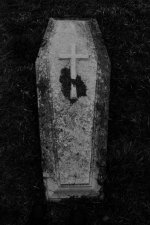
"The box is exactly your size," I said. "That's the first thing you notice. Someone measured you."
His hands went white on the wheel. The highway stretched ahead of us, empty and straight, and the cab was warm and the engine hummed and I could feel the road moving under me and the moving was the reason I was here. The moving was the opposite of the room. The room was always still. The road changed at every point and the change was distance and the distance was between me and the building and the building was behind us and the truck was moving and the moving was everything.
Go to the next part:
https://www.abctales.com/story/soulfire77/iii-body-box-part-two
- Log in to post comments
Comments
you've cut the dimensions of
you've cut the dimensions of the story really fine. great stuff.
- Log in to post comments