


15 - The Unforgivable I

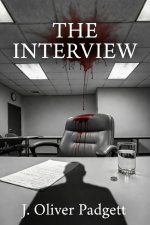
By SoulFire77
- 326 reads
THE INTERVIEW
15: The Unforgivable I
Q75. "What is the thing you will never forgive yourself for?"
The question dropped into the silence like a stone into deep water. Dale felt it sink through him, past the layers of confession he'd already given, down to something darker.
"I—" He stopped. There were so many things. The years of absence. The daughter he'd failed. The marriage he'd let wither. But underneath all of those, there was something else. Something he'd never spoken aloud.
"Take your time," Ms. Vance said.
"There was a night." The words came slowly, dragged up from a depth he rarely visited. "Melissa was sixteen. She'd been—she'd been having a hard time. We didn't know what was wrong. She wouldn't talk to us, wouldn't eat, spent all her time in her room. Linda wanted to take her to someone—a therapist, a counselor—but I said no. I said she was just being a teenager. I said she'd grow out of it."
"What happened?"
"One night, I came home late. Eleven, maybe midnight. Linda was asleep, and I went to check on Melissa—I don't know why, I never did that, but something made me stop at her door. And I heard her—" He swallowed. "I heard her crying. Not loud. Just—just this sound, this broken sound, like something inside her was dying."
"What did you do?"
Dale was quiet for a long moment. The memory was vivid, painfully clear—his hand on the doorknob, the sound of his daughter's grief filtering through the wood.
"I walked away." The words came out flat, lifeless. "I stood there for—I don't know how long. And then I walked away. I went to bed. I told myself she needed privacy, that she wouldn't want me to see her like that, that I'd make it worse if I went in. I told myself all the things you tell yourself when you're a coward."
"You think you're a coward?"
"I know I am. I left my daughter crying in the dark because I didn't know what to say to her. Because I was afraid—afraid of her pain, afraid of not being able to fix it, afraid of—" His voice cracked. "Of being inadequate. So I walked away. And I've never forgiven myself for that. I never will."
"Did you ever tell her? That you heard her that night?"
"No." The word was barely audible. "How could I? How could I tell her that I heard her breaking and I didn't do anything? That I chose my own comfort over her pain? She'd—" He shook his head. "She'd know. She'd finally know for certain what she probably already suspected. That her father was never worth counting on."
"What was wrong with her? That night, those months—did you ever find out?"
"She—" Dale tried to remember. There had been something, some explanation that came later. But the specifics—"She was going through something at school. A boy, maybe. Or her friends. Linda figured it out eventually, talked her through it. She got better."
"But you don't remember the details."
"I remember enough. I remember that my daughter needed me and I wasn't there. The specifics don't—" He stopped. The specifics didn't matter? Or the specifics were gone, worn away like everything else he'd shared in this room?
He couldn't tell anymore.
Q76. "What is the thing no one knows about you? Not a secret you're keeping. A truth you've never spoken."
Dale almost laughed. After everything he'd confessed—the failures, the fears, the cowardice—what was left? What truth hadn't he already dragged into the light of this cold room?
But there was one. There was always one more.
"I don't love my life." The words came out quiet, almost matter-of-fact. "I've never loved it. Not the work, not the—not any of it. I've spent fifty-four years doing what I was supposed to do, being who I was supposed to be, and none of it has ever felt like mine. Like something I chose."
"You feel trapped."
"I've felt trapped since I was eighteen years old. Since I took that first job at the loading dock and realized that this was it. This was what my life was going to be. Work and bills and responsibility, forever, until I died." He looked at his hands. "I used to dream about—it doesn't matter. Stupid things. A different life. But I never did anything about it. I just—kept going. Kept doing what was expected. And now I'm fifty-four, and I've never once done something just because I wanted to."
"What about Linda? Melissa?"
"I love them." The response was immediate, defensive. "I love them more than anything. But loving them and loving my life—those aren't the same thing. I can love them and still feel like I'm suffocating. I can love them and still wonder what would have happened if I'd—" He stopped.
"If you'd what?"
"If I'd been brave enough to want something for myself."
Q77. "What did you sacrifice for your career that you told yourself was worth it?"
"Everything." The word came out without hesitation. "I sacrificed everything. Time with my daughter. My marriage. My health—" He gestured vaguely at his body, at the back that ached and the hands that trembled slightly. "My sense of who I was outside of work. I gave it all to the job because I thought—because I told myself—"
"What did you tell yourself?"
"That it was noble. That I was providing for my family. That the sacrifice meant something." He laughed, short and bitter. "But the truth is, I just didn't know how to do anything else. I didn't know how to be a present father or a good husband or a whole person. I only knew how to work. So I worked, and I called it sacrifice, and I told myself I was a martyr when really I was just—"
"Just what?"
"Hiding. I was hiding in the work because everything else was too hard."
Q78. "Tell me more about the scar. Linda's scar."
The question seemed to come from nowhere, a return to something they'd discussed—how long ago? An hour? Two? Time had lost all meaning in this room.
"I already told you about it. The kitchen. The knife. Melissa was sick, and Linda was making soup, and—"
"What kind of soup?"
"Chicken noodle. I told you. From scratch, because Melissa wouldn't eat the canned kind."
"What did it smell like? The soup?"
Dale tried to remember. The kitchen, the steam rising from the pot, the smell of—
The smell of—
"I don't—" He frowned. "Chicken soup. It smelled like chicken soup."
"That's not very specific."
"It was almost thirty years ago. I don't remember what it smelled like." He heard the defensiveness in his voice. "I remember what matters. I remember Linda's hand, the blood, driving to the hospital. I remember what she said afterward, about being wounded in the line of duty."
"What exactly did she say? Her words."
Dale opened his mouth to answer. The joke she'd made, sitting in the ER with the stitches fresh in her hand. The exact words, the way she'd laughed even though it must have hurt. He'd heard her say it. He'd been there.
"She said—" He stopped. The shape of the joke was there, but the words—"She said something about—about motherly duty. Being wounded in the line of—"
"You're not sure."
"I'm sure she said it. I'm just—the exact words—"
"It's okay." Ms. Vance made a note. "You've been talking for a long time. The precision fades."
But Dale wasn't listening. He was thinking about the scar, about touching it for thirty years every time he held Linda's hand. He was thinking about the story behind it, the story he'd told in this room, and wondering how much of the story was still his.
How much of any of it was still his.
Q79. "What would your daughter say if she knew everything you've told me today?"
Dale was quiet for a long moment. The room pressed in around him—the beige walls, the frozen clock, the spreading water stain. He imagined Melissa sitting where Ms. Vance sat, listening to everything he'd confessed. The failures. The cowardice. The night he'd walked away from her door.
"She'd say she wasn't surprised." His voice came out hollow. "She'd say she already knew. That she'd always known what kind of man I was. That nothing I told you would be news to her."
"You think she already knows your secrets?"
"I think children know their parents better than we want to believe. They watch us. They learn us. They see the gap between who we pretend to be and who we actually are." He swallowed. "Melissa saw. She's always seen. And the distance between us—it's not because she doesn't know me. It's because she does."
Ms. Vance nodded slowly. She set down her pen, folded her hands on the table.
"I want to ask you something, Dale. And I want you to answer honestly."
"I've been answering honestly."
"I know. This is different." She leaned forward slightly, and for the first time since the interview began, something in her posture seemed almost—eager. "Tell me your name."
The question was so simple, so basic, that Dale almost laughed. After everything—the excavation of his memories, the confession of his failures, the slow erosion of everything he thought he knew—she was asking him his name.
"Dale—"
He stopped.
The word was there. He knew it was there. His name, the thing he'd been called for fifty-four years, the word that meant him.
"Dale—"
The second part wouldn't come. His last name. The name on his driver's license, his credit cards, the mortgage that was fourteen days past due. The name his father had given him. The name his father had carried, and his father's father before that.
"Dale—" He pressed his fingers against his temples. The headache was blinding now, a pressure that seemed to fill his entire skull. "Dale—"
"Take your time."
"Kinney." The word burst out like a cork from a bottle. "Dale Kinney. My name is Dale Kinney."
He sat back in his chair, breathing hard. His heart was pounding. His hands were shaking. He'd had to reach for his own name—had to dig for it, fight for it—and for a moment, a terrible moment, he hadn't been sure it would come.
"Good." Ms. Vance made a note. "That's good, Dale."
"Why did I—" He couldn't finish the question. Couldn't ask why his own name had felt so far away.
"You're tired," she said. "You've been here for a long time, answering difficult questions. The mind gets fatigued."
"That's not—" He stopped. It was easier to accept the explanation than to consider the alternative. Easier to believe he was tired than to believe something was being taken from him.
"Just a few more questions," Ms. Vance said. "We're almost done."
Dale looked at her. At her calm face, her patient eyes, her pen poised over the legal pad.
"A few more," he repeated.
He didn't believe her. He wasn't sure he believed anything anymore.
But he stayed in his chair.
- Log in to post comments