


The Bungalow-9 & 10

By Ivan the OK-ish
- 296 reads
Continued from Chapter 8: The Bungalow-8 | ABCtales
Chapter 9
Hawke had been to the police station in Caterham to answer a few questions.. A voluntary interview, but under caution. He could walk out of the door any time, but it wasn’t exactly a fireside chat.
Pretty much the same things that they’d asked before. One of the detectives had said, pointedly, that his (alleged) walk on the South Downs had conveniently taken him away from any surveillance or traffic cameras for a good few hours. Had he spoken to anyone in that time, seen anyone he knew?
Hawke pointed out that Hayley would certainly be remembered by the staff at the Harrow and Uber would have a record.
What about the hours between their parting company on Stanstead Road and his return to Hilltop Lane? They only had his word that he hadn’t turned around, gone back to his home, murdered a pikey in the field and then walked back along Pilgrims Way, making it look as if he was innocently returning from South Hawke. Why had he gone to South Hawke? What was there? Describe it…
They’d asked about the envelop in the river too. What was in it? Photographs? How many? Mags? What sort? How come the envelope sank so quickly?
Had the divers found it yet, Hawke asked. They wouldn’t say. But find it, they would…
Chapter 10
“You’re attendance would be…highly desirable. Yer following me?”
Hawke looked over his shoulder. If the librarian was surprised by Roy – Razor Roy’s - Belfast vowels, she didn’t show it. Purley was a melting-pot these days, people from all over – Pakistan, Bangladesh, Poland, Ukraine, Africa and even the odd Ulsterman. The traffic on the gyratory snarled and roared.
Hawke turned round again to face Razor Roy who sat, folded arms resting on the table opposite. He was quite a small guy, smaller than Hawke remembered. The hair had greyed and thinned but the piercing blue-eyed stare was just the same. A hard man to read, as ever.
“But I’ve told you all I know. I’ve described the place as best I can. Honest,” Hawke half-whispered.
“Our fellers, they’ ve been all over, followed yer directions. Couldn’t find a thing.”
“But what makes you think I’ll do any better? Haven’t set foot in the bloody province for over thirty years, thank God.”
“You were there, Hawky. Perhaps we’d be able ter…jog yer memory.”
“But I’m under surveillance right now.”
“Under surveillance? Getting careless in yer old age, Hawky?”
“No. You know a pikey got shot, up in Chaldon. In the field behind my house?”
“Think I heard something, yeh. You do it?”
“NO! But they suspect me of knowing something about it. They’re watching my movements.”
“Yer should keep off the hot sarce…But seriously. Time’s not on our side. The Truth and Reconciliation people, they’re onto it. Need to get there before they do…Look, if it’s a cover story you’re needing, you’ll be heading over the Water to talk about a bit of freelance security work. In fact, needn’t be a cover, if you’re interested.”
“I’m retired.”
“OK, fair dos. But we’ll sort the flight out, there’s money for travel expenses, of course. Cash. Understood?”
“It’s up to you. If we all get busted by the Surrey plods, you’ll only have yourselves to blame.”
Three days later, Gatwick departures, 5.30am. They’d booked a flight in his name on the 6am Easyjet to Belfast International but there was another booking on the 08.25am in the name of a Mr Andrew Doyle. He sat on a high stool in the Wetherspoons Red Lion, taking advantage of the unlimited coffee for £3.60. Most of the other people were holidaymakers, getting stuck into pints of Stella despite the hour. Well, good luck to them. Some amazing tatts on show; everyone seem to have them these days.
He had Doyle’s passport in his pocket, just in case anyone asked. Hawke was a bit hazy about why he needed it; surely Northern Ireland was part of the United Kingdom, still. God knows, he’d spent three years of his life helping to make sure that it stayed that way. No matter. The 08.25am flight was the one he was to take. If any detective fancied coming along for the ride, that should be enough to throw them off the scent. Hawke wasn’t quite sure that it was, but if it didn’t, that was the Ulstermens’ problem, not his. Though come to think of it, getting dragged into a Truth & Reconciliation case would no doubt put the heat on him even more, might lead to two sets of detectives trying to find out if he’d had anything to do with the dead pikey.
Belfast International, five minutes early at ten to ten. Hawke had never set foot in the airport; they’d always shipped the troops over by train and then the ferry from Stranraer.
‘Belfast’ was a misnomer; the place was in the middle of green fields. He bought a Translink day ticket at the tourist information desk. Tourists! In Northern Ireland? Would have been unthinkable in his day. Even so, the guy at the desk seemed surprised, and pleased, to have a customer. Bad reps take a long time to fade.
Hawke hung back in the deserted arrivals hall until five minutes before the 109A was due to leave the bus stop at 10.35.
Only two other people got on with him – an elderly gent with a red weatherbeaten face and a middle-aged woman with two large shopping bags. They both got off somewhere along the route. That left only the driver to worry about.
The bus wound its way through green County Antrim fields; the drought that was beginning to parch south-east England hadn’t reached these parts, not yet anyway. Farms. Field gates, hedgerows with something white in them – Old man’s Beard? – rampant. The hills were like the curves on a beautiful Irish colleen’s body. But a colleen that could wake up in the middle of the night and stab you fatally in the back.
You’d never take this place for a war zone. Well, it wasn’t, only when war was actually happening. A shot ringing out, startled crows cawing. Then silence again. Grass grew quickly in these parts, hiding the scars. The physical ones, anyway.
For most people in Ulster, the war was something that happened over the hill, in the next town, the next street. It was on the telly. Unless you were on active service.
It was a short walk from the bus stop to Lisburn railway station. Pretty, like something out of one of Thomas the tank Engine books, how country stations on England used to look with wooden awnings, hanging flower baskets.
Razor Roy had given him a sketch map to get him from Portadown railway station across the concrete horror of the urban motorway to McConville’s Bar on Mandeville Street. They’d told him not to use Google Maps, not to have his phone on, just in case somebody was listening in.
McConvilles looked as if it was shut, the plain windowless street door under the huge lamp gave nothing away, but it opened when he pushed it. The place was divided into a row of snugs, like old-fashioned railway compartments, once a characteristic of pubs in this part of the world. Third snug from the door, Razor Roy had said. Gordon – Gordo – would be waiting for him. Probably not his actual name. Roy probably wasn’t Roy, come to that. McConville’s was almost empty; a couple of early drinkers perched up at the bar, the racing on the TV burbling gently away in the background. All the snugs were empty, except the third.
They drove south out of Portadown in Gordo’s battered dark blue four by four, down Tandragee Road, then sharp left onto a minor road, past a couple of neat grey pebbledashed bungalows, then, after about a mile, right at a lonely crossroads down a narrow laneway. Gordo bumped the car onto a rough track that gave onto what looked like a wheatfield and turned the engine off. He nodded to Hawke to get out of the car. He was a man of even fewer words than Razor Roy, taller, gaunter, brown eyes sunk behind the heavy lined folds of his face. “About a couple of hundred yards up here.” He’d obviously thought better about ploughing across the field in the four by four, either in deference to the farmer’s crop or maybe to avoid attracting unnecessary attention.
They followed the hedgerow up the wheatfield, Gordo leading the way, planting his Doc Marten-ed feet methodically one after the other. Farm machinery clattered and groaned, unseen over the horizon.
They reached the wooden fence at the end of the field and stopped. The ground had been churned up; there were signs where three holes, each the size of a prone body had been dug and then filled in again with loose soil. “Left corner of the field. We went down three times with the mini-digger, six feet down. Nothing.”
Hawke wondered what the farmer made of all this activity. Perhaps he was in on it, a sympathiser. Perhaps he didn’t know, or pretended not to. He stroked his chin, as if deep in thought, though in reality he hadn’t a clue what to suggest. How was he meant to remember digging a hole in a field, in the dark, forty-three years ago? Trouble was, these people wanted answers.
Then he gave a start. “That old iron gate, over the other side, in the hedgerow. I’m sure, that was just behind us, when we were digging.”
“That’s in the next field.”
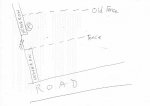
Hawke swung his left leg over the fence and scrambled over it, following the hedgerow for few feet and stopped. Then he turned around and faced Gordo. “This fence – it’s been moved. Look, here’s the post from the old one in the hedge.” He slapped the palm of his hand on the rotted, skeletal piece of timber. “If you look at this fence here, it’s quite new. Well, from after the time, anyway.”
Gordo nodded, slowly.
“So where you need to dig is here. By the hedge, just beyond the gate.”
Gordo nodded again: “OK, we’ll get the Boys onto it this evening. We’ve booked you into the Belfast Travelodge. Hang on there until you get the word from us.”
Continued in Chapter 11: The Bungalow-11 | ABCtales
- Log in to post comments
Comments
Aer Linguistics
Geezaweebaddlagannass... a Nrn Irn sentence in a single word.
Turlough
- Log in to post comments
Bout ye?
That's how I spoke myself until I was twelve and the kids at the wild comprehensive school in Leeds into which I had been so rudely cast 'persuaded' me to change. We didn't have hot sarce in Ballymoney in 1970 though. There'd have been only brayn sarce or rayd sarce.
Years later I worked with a Belfast lad in Bristol. He didn't like herbal tea because he insisted it was 'herbal' (the Belfast word for horrible). My real name's Terence but he always called me Turnce. And at the same place there was a bloke from Kilmarnock who insisted that KFC was his football team. Despite all that it was the Bristol dialect that was the most entertaining. Churrrz droyve!
I love accents... well, most of them.
Turlough
- Log in to post comments