


Heel - § 3: The Act

By SoulFire77
- 489 reads
Arlene's kitchen was yellow and had been yellow as long as Lorraine had been coming to it, a soft butter color on the walls and a deeper one in the curtains Arlene had run up herself on the machine. In the afternoons the light came off the back yard and filled the room up like something poured. Lorraine came in at the back without knocking, the screen clapping shut behind her, and Arlene was at the counter with her hands down in a bowl and said come in, come in, you're just in time to be no help to me at all, and laughed. It was the laugh Lorraine would not be able to find later. It was big and rough and came all the way up out of her, with no held part anywhere in it.
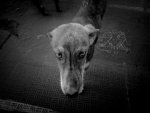
Buddy came in at Lorraine's heel. He went once around the table and lay down in the doorway to the front room with his chin on his paws, and his eyes went over the kitchen and settled and stayed.
The boys were out back. Denny and Petey had a thing going with a length of clothesline and the low limb of the maple, and every little while one of them would set up a holler and the other would laugh, and the sound of it came in through the screen with the smell of the cut grass. Denny was nine and brown from the summer and gone all day on his bicycle. Lorraine could hear him out there being a boy and did not have to look to know the set of him.
Through the screen the yard was all long gold light, Denny up the maple now with the clothesline and Petey under him calling up instructions he had no business giving. Buddy lay in the doorway with his back to the boys and his face to the kitchen, to the two women at the table, and Lorraine stepped over him to get to her chair and did not look down. She had not looked down at him in years. He was underfoot and not thought about, a good dog in a doorway, and she had stepped over him and forgotten him before her foot came down on the other side.
"Sit," Arlene said. "I've got coffee made and a ring from this morning that nobody's touched but me, and I touched it twice." She brought it to the table, the percolator and the cups and the coffee ring on a plate with a knife, and she sat down across from Lorraine and pushed a piece of the morning's news to one side without reading it. They had been doing this for years. There was a place at Lorraine's elbow where the oilcloth had worn thin and pale under her arm.
There was no other house Lorraine went into like this. With everyone else she came to the door and waited to be asked. With Arlene she came in at the back and let her face do what it wanted to do, and did not have to set it going in or carry it home tired after. A thing that struck her funny got to be funny, and she laughed and the laugh was hers.
They talked about the boys and about Petey's teeth coming in crooked and whether it was worth what the man wanted to straighten them, and about a woman from the church whose husband had gone off and come back and gone off again, and Arlene did the woman's voice, the wronged and patient sound of it, until Lorraine had to set her cup down to keep from spilling it.
Arlene got up and worked at the bowl on the counter while she talked, her back half to Lorraine, her elbows going, and she told the rest of it over her shoulder. There was a part about the woman's hat at the Easter service that Lorraine had heard three times now and that got better in Arlene's mouth each time she told it, the hat bigger, the feather more put-upon, until the woman herself was hardly in the story anymore and it was only Arlene and the hat. Lorraine laughed until her eyes ran. The boys hollered out back. The percolator ticked as it cooled on the stove.
The light moved a little on the wall. Out back a holler went up and broke off into laughing. Buddy lay in the doorway and watched.
It was the best hour of Lorraine's week and she knew it while she was in it, which was a thing she did not often get to do.
Then there came one of the small holes in the talk that two people who have talked for years will fall into without minding, and Arlene did not fill it back up. She was looking at the dog.
Lorraine had seen her go off like this a few times lately. There had been an afternoon a week or two back at the church kitchen, the two of them up to their wrists in the big pans, and Arlene had stopped with a pan half out of the water and said did Lorraine ever notice the milk truck, the same man, the same way he set the bottles down and touched his cap, and Lorraine had said well it was a steady job and a man got his routine, and Arlene had let it go but had not laughed. There had been the business with the radio, a program Arlene swore had run once before, the whole of it, word for word, the man losing his money on the wrong horse and the announcer's little laugh coming again in the very same place, and Lorraine had said they made those things ahead of time, surely, and ran them more than the once. She had a smooth thing ready every time. She had not thought about where the smooth things came from. They came out of her ahead of her wanting them, and they worked, and Arlene's face would clear, and that had seemed to Lorraine to be a kindness she was able to do.
"Lorraine," Arlene said now, still looking at the dog. "How long have you had Buddy."
"Since Denny was six," Lorraine said. "He came to us out of a litter of Hollis Ward's, that fall. In the peach crate. You remember."
"I remember," Arlene said. "Six." She was quiet. "He's nine now. Denny."
"He is."
"So that dog's getting on, then. Be old before long." She said it carefully, setting each word down by itself, watching the dog the whole time. "Only he's not. Is he. Look at him, Lorraine. Look at his face."
Lorraine looked at the dog because Arlene had told her to, and her eyes went to him before she had decided to send them, the small pull of it, and Buddy lifted his head off his paws and looked back at the two of them in the doorway light, brown and easy and unmarked. There was no gray come into him. There was no gone-thin place over the hips, no cloud starting in the eye, no slowness in him. He had got up that morning at the foot of Denny's bed and come down the steps and trotted all the way over here at Lorraine's bicycle wheel, easy as a pup. He was the dog out of the peach crate. He was that dog exactly.
"Dogs are different," Lorraine said. "Some of them carry their age better."
"Three years," Arlene said. "Going on four. And not a hair of it on him." Her voice had gone down to almost nothing. "I had a dog growing up. By four he had gray all in his muzzle and he'd sleep the whole day in the one spot of sun. They go gray, Lorraine, the same as us. They slow up and they go gray and then one winter they don't come in off the porch." She looked away from the dog at last and looked at Lorraine. "He hasn't changed. In all this time he hasn't changed one bit, and I don't —" She stopped. Her hand had come up off the table and she put it back down flat. "Tell me I'm being a fool. Go on. Tell me I've got too much time and not enough to do with it, like Earl says, and I'll laugh and we'll have another cup. Tell me."
There it was, held out across the table to her. All Lorraine had to do was take it. A laugh would do it, the right easy laugh and the right words after, oh Arlene, you and your spells, you'll worry yourself into an early grave over a healthy dog, and the thing Arlene had said would go down soft and be buried and the kitchen would be yellow again and the boys would holler in the yard and it would all close back over and be all right. The laugh was there in Lorraine. She could feel the size and shape of it. It would have cost her nothing.
She looked at the dog.
She did not decide to. Her face was already turning to him before the laugh could come up, her eyes going to him in the doorway as they had gone when Arlene first said look at him, before she could send them anywhere else, and the dog held her there, his head up, his tail going one slow time across the floorboards. The moment for the laugh came up and went past, and she let it go past. Her face stayed turned to the dog. Nothing came up out of her at all. The laugh did not come, and the easy word that went with it did not come, and what Arlene had said stayed in the room where she had put it, with all its weight on it. The dog watched it hang there.
"Lorraine," Arlene said.
"He's a healthy dog," Lorraine said to the dog, and it was true, and it covered nothing, and they both heard that it covered nothing.
When Lorraine brought her eyes back to her, Arlene's face had a new thing in it that had not been there a minute before, a closing, a drawing-in at the mouth and around the eyes, and she sat back a little in her chair, away from the table, away from Lorraine, and she took her hands down into her lap. The laugh did not come back to her that afternoon. Lorraine reached for the coffee and found it gone cold in the cups and poured it out and put fresh on and they talked some more, about the church and the boys' teeth, and the words went back and forth across the worn place on the oilcloth, and the light moved on off the wall toward evening, and it was all right on the surface of it. But Arlene had her hands in her lap, and she kept them there, and every little while her look went past Lorraine to the dog in the doorway and came back changed, and Lorraine knew that she had been weighed and come up short, and put the knowing down before it could take on a shape she would have to carry home.
She called Denny in at five. He came through grass-stained and starving with Petey behind him, and the two boys stood in the yellow kitchen drinking milk and being told to slow down, and Arlene tousled Denny's head and said go on then, get this one home before he eats me out of house, and her voice was warm for the boy, all the way warm, and went flat as a board when it passed over Lorraine. At the door Arlene held the screen for them and stood in it with the kitchen light behind her, and Lorraine looked back from the steps to say something and could not find the thing to say, and so said only good night, and Arlene said good night, Lorraine, and let the screen come to.
Lorraine walked home in the long light with Denny going on ahead, and Buddy came along at her heel where he belonged, his nails ticking on the road, his head up, easy, brown, the same as he had been at the peach crate, the same as he would be.
The evening was coming on soft and the cicadas had started up, and somewhere down the block a screen door clapped and a woman called a child in to supper in a voice with no fear anywhere in it. Lorraine's house came up on the left with its windows dark. Across the two yards Arlene's kitchen was still lit and would be lit a while yet, the one gold square in the blue coming down, and Lorraine turned in at her own drive and did not look at it, or told herself she did not.
At her own back step Denny went in ahead of her to the table and the light. Lorraine stood a moment in the yard. The dog did not go in after the boy. He sat down at her feet in the cooling grass and turned himself toward Arlene's house across the two yards, toward its one window gone gold in the dusk and Arlene a shape moving in it, and he set his eyes on the window and held there, his ears up, his whole self pointed at the light, and his tail did not move at all.
- Log in to post comments
Comments
Oh god I can't see where this
Oh god I can't see where this is going at all except it's a place beyond my imagination.
I have so many questions - what is Arlene going to do that results in her being taken away ? Who took her away ? What can Arlene see about Buddy that Lorraine can't or won't ?
I'm completely hooked.
(PS I'm a bit confused about the physical distance from Lorraine's house to Arlene's. In this story it's half a mile, but in the first story they're opposite each other in the same street.)
- Log in to post comments
I know what you mean about
I know what you mean about stories taking on a life of their own. Personally, I don't necessarily want an ending where everything is tied up. I rather like the books/films where you have a long conversation with your friends about what actually happened, and everyone seems to have a different interpretation. A good recent example I saw is a Brit film called All Of Us Strangers, which is open to all sorts of different interpretations.
Looking forward to your next instalment !
- Log in to post comments