


The Lady on Sycamore Lane (3)

By SoulFire77
- 1121 reads
VIII.
The library was three stops past the end of Sycamore Lane, in the town center. Ruth had not been in years — she couldn't have said how many — and when she stepped off the bus and saw the building she noticed it had changed again, the way public buildings do, slowly enough that you stop keeping track.
The doors opened as she approached. She walked through.
Inside, the light was everywhere — not overhead, not from the walls, just present, sourceless and even and without shadow. There were no shelves. No stacks, no rows, no spines. The space was open and clean, and Ruth moved through it without stopping, because she was not here to look around. She was here for one thing.
In a far section, a group of children sat in a loose semicircle. In front of them, a model of the solar system hung in the air — not projected, not mounted, just there, each planet turning on its axis, surfaces alive with detail. A girl of about seven reached her hand through the space between Mars and Jupiter and passed her fingers through a band of shimmering points that might have been asteroids. Ruth kept walking.
The reference desk was at the far end. It was shaped like a desk—semicircular, chest-high, smooth. Behind it, where a person would sit, there was no person. There was a presence—Ruth had no better word for it—that occupied the space and attended to her approach the way a librarian does: patiently, with the readiness that says I am here when you are ready.
Ruth put her hands on the desk. It was warm.
"I want to ask about something," she said.
"Of course." The voice was calm, directionless. "How can I help you?"
Ruth opened her mouth. The old man's word. The word that Bud Fenton had made into a blade and a stranger on a bus had made into a gift.
"Cat," she said. "I want to know about cats."
"Felis catus," the voice said. No pause. No confusion. "A small domesticated carnivore. First associated with human populations approximately ten thousand years ago in the Fertile Crescent region. Widely distributed across all inhabited continents during the period of human-animal cohabitation. Characterized by retractable claws, acute night vision, and a range of vocalizations including purring, hissing, and a distinctive territorial yowl."
Ruth's hands tightened on the edge of the desk.
"Last confirmed living population: a managed colony in the Azores Archipelago. Global extinction of Felis catus confirmed in 2037. The species was among the final cohort of the order Carnivora, following the broader collapse of terrestrial animal life by approximately eleven years."
The number hung in the space between Ruth and the voice. She did the math without meaning to.
Eighty-seven years.
"Would you like to hear a recording?" the voice asked. "Archival audio exists for most Felis catus vocalizations."
"Yes," Ruth said.
There was a soft hiss first—the sound of old technology remembering itself, a faint crackle of distance and age. Then the recording began, and it began mid-sound, as if whatever device had captured it had been switched on a moment too late, catching the cat's voice already in motion, already climbing. The yowl was there. The break. The staccato bursts. But worn—the edges of the sound degraded, thinned by the years the way a photograph thins, losing detail but not truth. Underneath it, barely audible, was something else: the ghost of a room. A low hum that might have been a machine or might have been the building itself. And beneath that, so faint that Ruth almost missed it, a human voice—someone in the room where the recording had been made, almost a century ago, saying something she could not make out, a word or two, indistinct, already dissolving into the static. Someone who had been in the presence of the thing that was now gone. Someone who had heard this sound and thought nothing of it, because in their world this sound was ordinary.
Then a pause. A gap in the recording where the cat had stopped and waited—for the door, for a response, for something to change—and the silence in the gap was the oldest thing Ruth had ever heard.
The yowl resumed. Climbed. Broke. Demanded. And stopped.
Ruth closed her eyes. She put one hand flat on the desk and held it there.
She stood at a reference desk in a library that had no books, and she listened to the voice of a thing that had been gone from the earth for eighty-seven years, and the voice was the same voice that had come to her door. The same yowl. The same break. The same short, furious, heartbreaking demand for something—entry, attention, warmth, the right to exist in the presence of another living creature. The same silence in the middle, where it stopped and waited and began again.
The recording ended. The hiss faded. The library was quiet.
"Thank you," Ruth said.
"You're welcome. Is there anything else?"
There was nothing else. There was everything else, but none of it was a question a voice in a library could answer.
She walked back through the building, past the children and their planets, past the sourceless light and the silence that had never held paper, and out through the doors that opened without being touched and closed behind her without a sound.
She walked home to Sycamore Lane in the late afternoon light, past the houses and their porches and their mailboxes, past number eleven where Dolores did not appear in the window, past number nine where Bud Fenton's curtain did not move, and up the walk to number fourteen.
She sat on the porch. The second chair was empty. The garden was half-wild, the marigolds gone brown and listing. The scratch on the mailbox had not been repaired.
She reached over and touched the arm of the empty chair. Briefly. The way you touch a thing to confirm it is still there.
Then she folded her hands in her lap.
The porch light came on. The afternoon was fading. Down the street someone was closing a door and someone else was pulling into a driveway, and the small, ordinary sounds of Sycamore Lane arranged themselves into the pattern they had always arranged themselves into, and Ruth listened, and they were not enough. They were the only sounds there were. They were the only sounds there had been for a long time—doors and footsteps and voices and the hum of things that worked—and they had been the only sounds for so long that everyone had stopped noticing that there were no others, and the not-noticing was so complete that when another kind of sound finally came, when it came to her door and pressed its voice against the wood and cried out to be let in, the street called her crazy and took her garden and her friend and her name and left her here, in this chair, with the light on, waiting.
Ruth Calloway sat on her porch.
The street was quiet.
She was listening. And she had decided something, sitting there with her hands folded and the porch light on and the empty chair beside her. The next time the sound came to her door, she would open it. She would open the door and she would let it in.
***
Here is what was lost.
A small, domesticated carnivore that lived alongside human beings for ten thousand years. A creature that slept on children's chests and screamed at the rain and pressed its voice against closed doors when it wanted to be let in. It has been gone from this world for eighty-seven years. The word survives in phrases that people use without understanding—something about curiosity, something about bags, something about having someone's tongue—but the thing itself, the warm, heavy, furious, tender thing, is gone. It was among the last. After it, the silence became total, and the silence has been total for so long that people have stopped hearing it as silence. They hear it as the world. They hear it as normal. They hear it as the way things are.
And yet.
Something came to Ruth Calloway's door. Something with a voice that had no right to exist found a house on a street where the mailboxes are painted and the gardens are maintained and the neighbors are decent people who would never, not once, believe they had done anything wrong. The street heard a woman screaming. The street heard a woman talking to nothing. The street called her the crazy cat lady and did not know what a cat was, and could not have known, and went on with its Tuesday mornings and its painted mailboxes and its ordinary, ordinary quiet.
The garden at number fourteen has gone to seed. The second chair on the porch has not been sat in for weeks. The woman who tended the marigolds and waved to her neighbors and earned, by every measure, the quiet life she built—that woman sits on her porch tonight with the light on, waiting for a sound that the world forgot how to hear.
She is listening.
Somewhere, she believes, something is listening back.
- END
- Log in to post comments
Comments
I note the phrase 'crazy cat
I note the phrase 'crazy cat lady' has stayed long after the cats left - didn't realise it was set in the future until she went to the library. Cats gone, patriarchy still present and correct : )
I really enjoyed this story - thank you!
- Log in to post comments
This is lovely Jay, a really
This is lovely Jay, a really beautiful story, full of sadness but full of hope. Unfortunately I agree that people turn on those who are a bit different, people who don't conform to the norms, nobody wants to be seen to be associating with them.
I'm happy to put my hand up and say I'm a crazy cat lady. I have had many of them, and it's always the ones who were strays or ferals who have become the most affectionate, because they appreciate I took them in.
PS I'd like to point out when they make that awful yowling, howling, singing noise it's often not because they are fighting but romancing.
- Log in to post comments
fighting, romancing. Much the
fighting, romancing. Much the same things. Great story.
- Log in to post comments
SoulFire I'm coming back to
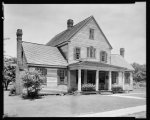
SoulFire I'm coming back to this because of the pic you've used. It's perfect but can you please confirm that you have permission to use it (even with the credit) as specified in the link you posted? Thanks
- Log in to post comments
It's a shame but it does say
It's a shame but it does say on the page to contact them for permission to use. We have to be really careful to respect copyright for everything - song lyrics, pics, quotes, even if credited. We can't afford legal costs!
Here's a copyright thing:
https://www.gov.uk/copyright/how-long-copyright-lasts
however it can be complicated further in the case of eg a musician whose body of work is now owned by someone else
Please don't let all that put you off adding pics because I think they really enhance things, but look in places like Flickr and google images where you can specify your search by usage rights and follow the individual piece's requirements
I think it's best to remove this one for the time being. You could try contacting them tomorrow and put it back if they say yes? Or you could find something else. I'll have a look tomorrow if you prefer (quite late here now)
- Log in to post comments
Thanks for changing and yes
Thanks for changing and yes she's right, we''d really rather you didn't use AI images though we don't ban them completely. New pic is great!
- Log in to post comments