


Bron-23

By Ivan the OK-ish
- 571 reads
Continued from Chapter 22: Bron-22 | ABCtales
The dome light pooled over the desk in the cab of No. 47840; otherwise everything was in darkness apart from the orange of Paddington station’s overhead arc lamps seeping through the begrimed windows.
A steady whine from the turbocharged engine, already working hard to heat and light the sleeping cars strung out behind the loco on Platform 1; the occasional cough-thump of the compressor, keeping up the pressure in the air brake system. Small pieces of torn-up paper thrust into cracks where ancient rubber window seals had given up the fight against 30 years of wind and rain.
Old No. 47840 had plied her 2,750 horsepower around the rail system for three decades. Not as glamorous, nowhere near as fast as the High-Speed Trains on the daytime service, she was more of a workhorse, even if she was officially named North Star, after the legendary Great Western steam loco. Top speed officially 95mph, according to the panel under the cab window, though even that was debatable. Bron thought she looked similar to the diesels that brought the Euston trains into Holyhead; next time she saw Uncle William if they used the same type on the North Wales Coast run from Crewe.
The Footplate Experience Scheme was the brainchild of someone in the train operating company’s management. Give the depot trainees a taste of life at the head end of the train, keep them interested. Lately, lots of them had defected from the railway for the big money and easier hours in computing, or finance.
As usual on these occasions, the Railway had turned up mob-handed. As well as Bron, there was Driver Higgins, a regular on ‘The Beds’ as far as Plymouth. Fred Wills, New Birch Moor chargeman and Bron’s unofficial mentor was there too along with Traction Inspector Brean, to keep an eye on things.
“Settle yourself into that right-hand seat,” said Brean.
“The right? I thought … “
“We drive trains from the left seat… “
“Didn’t use to on the old Great Western, we drove from the right seat” piped up Higgins. “I remember one time, we were …”
“Yeah, yeah … YOU probably remember shaking hands with old Isambard Brunel,” said Fred, sitting on the tip-up seat at the back of the cab. “Sorry about him, Bron. You’re in for five hours of Castles, Kings, frying breakfast on the shovel, goin’ down Dainton Bank at two hundred mile an hour – your head will be buzzin’ by the time you get to Plymouth.”
“Yeah, Sid,” said Brean. “You’re s’posed to be encouraging these youngsters, not putting ‘em off.”
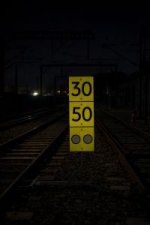
“There’s a TSR to thirty just after Slough tonight. They’re working on the slows …”
“You what? Been reading the traffic notices?” said Driver Higgins. “God, you youngsters are keen.”
“Bet that’s the first you knew about that restriction,” piped up Fred. “She’s putting you to shame.”
“Shut it … Been on the railway man and boy.”
“You know, Bron,when he’s not doing this, he’s down on the West Somerset Railway, Taunton way, driving kettles – for fun?”
“That’s true. Can’t deny it.”
“Bet your Missus loves that.”
“Yeah, especially as he pays a knocker-up bloke to come round and rap on his winder at three am, just to add that bit of steam age realism. …” said Brean.
“Don’t exaggerate. Four o’clock.”
The platform signal flashed briefly from red to yellow, then green. “Got the road!” said Higgens. Just need the right away.”
“He means, Bron, that he’s got the signal to go but he’s waiting for the platform people to give him the all-clear…” said Brean.
A whistle peeped from the platform, Driver Higgins leaned his head out of the window, looked backwards and then released the brake, checked the gauge and then eased the power handle over. Behind them, the old Sulzer diesel deepened its note, then a series of small jerks as it took up the slack in the couplings, one by one. Scarcely perceptibly, the old loco started to move, narrowing the gap with the green signal glowing at the platform end.
“Needs to take it gently, don’t want to snatch the couplings,” Brean explained.
“Musn’t wake the buggers up,” said Fred. “Lots of MPs use this train.”
“Why d’you think they found the subsidy to keep it running?” called Higgins.
The Clunk-CLUNK …Clunk-CLUNK of the now steadily moving train over the rail joints echoed off the Paddington roof. Driver Higgens pushed the controller over another notch. No. 47840’s exhaust note sharpened, somewhere between a exhalation of breath and a crackle.
Signal lights shone green in the west London night sky but Higgins shut the power momentarily and put his hand on the brake handle. “Just checking. Half these signals are invisible; that’s what happens when you let a committee design a station throat.”
Satisfied that the road was clear, he pushed the power handle back over and 47840’s exhaust note deepened.
“Will that count as the running brake test?”
“Oh, listen to Miss A Team!” said Fred.
“Yes, it will Bron,” said Higgins. “You have been doing your homework.”
“Literally” said Fred.
Now they were moving smoothly, over the points at Ealing Broadway, a flash-flash-flash of white neon, then out into the dark again.
“How do you see anything?” asked Bron. “It’s all so dark.” She’d been expecting high-intensity headlights, piercing the dark, lighting the way ahead.
“Different from driving a car,” said Brean. “Main thing is to see the signals. Less light you have, easier it is to spot ‘em. Train like this – needs half a mile to stop. No headlights on earth could show that far anyway.”
Joints in the track sounded like rifle shots, making the cab shudder. The rails gleamed in front of the windows, twisting to the left, to the right, straight on … all the way to Cornwall.
“Do we go through Box Tunnel?” asked Bron.
“Not tonight,” said Higgins. “We’re on the Berks and Hants - normal route. Sometimes we do, when there’s an engineering possession. Not this evening, though.”
“You into tunnels, Bron?” said Fred.
“No. It’s just my Uncle William. He said, there’s a load of the old steam locos stashed inside; they put them there in the sixties. In case there’s a war. The diesels – all their electronics would get fried if there was a nuclear bomb. So they stashed some of the old steamers inside. They’d be able to keep going – nothing on them to get destroyed.”
“You believe everything your uncle tells you, Bron?” said Brean.
“It’s true, though,” said Higgins, from the driving seat. “About two hundred yards, from the Bath end, on the down side, you can see where the brickwork doesn’t join up. He turned round and winked at Fred, with his left eye, so that Bron couldn’t see.
“Like King Arthur’s Knights. Sleeping till they get the call to defend Old England,” said Brean.
“Well, it’s a lovely story,” said Fred. “S’pose you must be the only bloke in the country that wants a nuclear war. Be like a pig in shit, driving your old kettles.”
Slough’s lights emerged from the gloom. Higgins shut of the power, reached for the brake handle and brought the Night Rivera down to a steady 29mph.
To be continued in Chapter 24: Bron-24 | ABCtales
- Log in to post comments
Comments
That was fascinating! Did you
That was fascinating! Did you used to be a train driver?
- Log in to post comments
Have you ever wondered about
Have you ever wondered about the sights and sounds of the tracks, as you settle into your seat on a train pulling out into the dark? Find out, in Bron's first trip in the cab, which is Pick of the Day!
- Log in to post comments