


A Most Cynical Decision

By Makis
- 1185 reads
It was a glorious June morning in 1946 when Jack Ogden left his cottage in the village of Wentworth in the West Riding of Yorkshire and began the familiar walk down to the great house. For forty-five years he had tended the gardens and parkland there, nurturing and cultivating the soil through the ever changing seasons. But this morning, on the day they had all dreaded, everything was about to change.
There was a strange air about the village, as if the very cottages themselves sensed something unsettling was imminent. The news had devastated everyone, stunned in disbelief that something so crazy, so unnecessary, so vindictive, could possibly happen. But today, by order of Great Britain's Minister for Fuel and Power, Emanuel Shinwell, government contractors were about to begin their work.
Jack turned into the long driveway and was immediately hit by the realism of the situation. Transporter wagons loaded with diggers, dozers and dumpers stretched along the driveway as far as the eye could see, and people he'd never seen before standing around in anxious groups as if reluctant to begin what they'd been sent here to do. He quickened his pace as a growing anxiety slowly spread through him and headed for the stable block and the old carriage house which was now his working sanctuary.
In the small office at the rear, hidden behind the tractors, mowers, estate working vehicles and carefully maintained racks of hand tools, Jack found his two workmates already preparing for the day's task. Ted Barker and George Wilkinson barely appeared to acknowledge his arrival and it was immediately clear that a sombre mood occupied their bolt hole. Jack slumped onto a bench opposite his two good friends and the three sat staring at each other in silence. They all had exactly the same thoughts coursing through their minds; dizzying, disorientating and frightening.
* * *
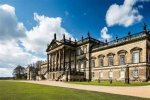
Wentworth Woodhouse, the largest privately owned country house in Europe, had for more than two centuries, been the fifteen thousand acre estate of the Wentworth family, Marquesses of Rockingham, Earls of Strafford and later the Earls Fitzwilliam. With more than three hundred rooms, a six hundred foot long Palladian facade and, at its peak, a staff exceeding three hundred, this estate had been the bedrock on which families had built their lives for nearly three centuries. It had been the home of a Prime Minister and host to royalty, aristocracy and celebrity since the late seventeenth century.
The family were owners of more than a hundred thousand acres of land across England and Ireland and had mined coal on a small scale since 1720. Large swathes of the land they owned in Yorkshire covered what became known as the Great Barnsley Seam and as the industrial revolution developed and the demand for coal increased in the 19th century, coal mining grew into epic proportion. Dozens of working shafts tapping the ever bountiful seam resulted in employment for thousands of local people and unbelievable riches for the Fitzwilliam family.
Unlike many employers of the period, the Fitzwilliams were known and respected for the manner in which they treated their staff. They expanded the village of Wentworth, building new and remodelling existing cottages, for occupation by their employees. They built a church, a school, village facilities and almshouses. They paid pensions to widows, provided medical care for the sick and held huge celebratory events in the grounds of the house, often attended by thousands enjoying lavish hospitality. Even though the sinking and management of mines was contracted out, the Fitzwilliam family always employed agents to monitor the operations and report back on issues of mine safety and staff welfare. The Fitzwilliams were not 'Bag Muck' employers, renowned for exploitation and evicting their striking tenants. They cared for their staff and invested in them, and the feeling was reciprocated.
* * *
The Second World War was now over and the country desperately needed fuel to get industry back into maximum production. The hundreds of privately owned collieries in the UK had just been nationalised and Emanuel Shinwell's remit was to maximise coal production from the country's existing resources. Sweeping new powers allowed him to not only take control of existing collieries, but to access land for the purpose of extraction wherever deposits existed. Much of the Barnsley Seam lay under Fitzwilliam owned land and Shinwell wasted little time in taking not only their nine collieries, but issuing an order to extract coal, by means of open-cast, from all of the farmland, parkland and gardens surrounding the great house itself.
Manny Shinwell had grown up in Glasgow and at the age of nineteen, as an apprenticed tailor, had become heavily involved in union activity. The years following the first world war were a period of huge unrest between workers and employers and Shinwell was heavily involved in the frequent protests held against poor wages and working conditions. In 1919, in a violent confrontation between protesters and the authorities over a forty hour week, now referred to as the Battle of George Square, Shinwell was arrested and tried for inciting riot. He received a five month prison sentence and a lifelong aversion of privilege and wealth.
When the open-cast proposal was announced, objection to it was lodged from all quarters of society: from the resident 8th Earl, Peter Wentworth-Woodhouse and the Council for the Preservation of Rural England, to the Yorkshire Miners themselves through their leader, Joe Hall. Yorkshire miners respected the Fitzwilliam family because they were considered decent employers. Estate villages had strong paternal traditions where generations of mining families had worked on Fitzwilliam land and their parkland was used recreationally by local communities. Many considered the estate as symbolic of their lives, livelihoods and communities.
Equally strong words came from within Parliament, with the likes of Anthony Eden and Winston Churchill describing Shinwell's plan as class warfare and a cynical act of vandalism. Concerned for the future of the house, Peter Wentworth offered it to the National Trust, but they were deterred by its sheer size and the costs of maintenance during post war austerity. They were also well aware of the potential for serious structural damage that may occur from close proximity mining.
* * *
Jack and his two silent partners put their three favourite spades into a wheel barrow and trundled it out of the coach house and into the internationally acclaimed gardens. They dated back to the 16th century and were now a landscaped-garden masterpiece. Geometric lawns divided by straight walks, elaborate parterres, knot gardens, terraces, bowling greens, orchards, mazes and ornamental plantations. There was even an 100 foot artificial “mount” topped with a summer house for viewing the estate.
They came to a halt in front of an extensive display of dazzling rhododendrons and stood in silence, gazing at what the renowned garden designer, Humphrey Repton, had established there a hundred and fifty years earlier. Today they were tasked with digging out and relocating the entire glorious array, knowing full well that such folly at the height of the growing season meant they may not survive the shock of being moved. They had no alternative. This sector had been scheduled for bulldozing in just twenty-four hours time.
Emanuel Shinwell ignored the outrage, the alternative proposals for less destructive methods of extraction, and even threats of strike action by the miners themselves. Fitzwilliam tenanted farmland — both arable and pasture — landscaped parkland, and formal and informal gardens, all fell victim to the National Coal Board's bulldozers. More than six hundred acres of topsoil, and everything growing, built, or formally laid out on it, was torn away and piled into spoil heaps thirty feet high; at one stage reaching to within fifteen yards of the great house itself. It was said at the time that, if you climbed to the top of one, you could see directly into the bedrooms on the first floor of the west side of the house. Manny Shinwell had made a decision that would effectively destroy one of the great treasures of English heritage
Within weeks of the work commencing, the site was visited by a member of the National Trust's Country House Committee, who submitted a detailed account of his visit. In it he described the most enormous house he had ever seen and everything surrounding it as being black with coal dust and more disfigured than the battlefield of the Somme. Mining operations and their consequences scarred the estate for decades and even though designated poor quality from the outset, 350,000 tons of coal was eventually extracted. Much of it remained stacked and unused across arable farmland for years.
At around the time of this whole sorry saga, Peter Wentworth-Woodhouse, the 8th Earl Fitzwilliam, had begun an illicit affair with Kathleen 'Kick' Kennedy, the older sister of future president John F Kennedy. Kick's husband, William Cavendish, heir to the Duke of Devonshire and Chatsworth House, had been killed in WW ll, but Peter Fitzwilliam was married. The two were together in Paris in May 1948 and chartered a plane to fly to the South of France for the week-end. The plane encountered bad weather and crashed into a mountain side, killing everyone aboard. The affair was considered a scandal by the society of the day and the devoutly catholic Kennedy family refused to attend their daughter's funeral in England. She was subsequently buried in the grounds of Chatsworth House, by the Cavendish family.
The decline of Wentworth Woodhouse following Peter's death in 1948 was not caused by a single event, but by the combined effects of war, economic collapse, political change, and the transformation of British society. That period of our history that had sustained great estates for centuries was ending. The war drained aristocratic wealth across Britain and large numbers of estate workers and servants left for military service or wartime industry, with many never returning. What set the demise of Wentworth Woodhouse apart from other large estates, was a decision born from the politics and resentments of Britain’s industrial past to order the callous desecration of one of our country's finest houses, when it was demonstrably unnecessary.
From 1950 to 1988, habitable parts of the great house were leased to become the Lady Mabel Teacher Training College, until escalating maintenance costs eventually resulted in it being put up for sale. Despite a number of wealthy private ownerships, the house proved just too much for any individual to come to terms with, requiring hugely expensive major structural repairs to the damage caused by decades of mining. Now safely in the hands of a preservation trust, it is focussed on raising the millions required to stabilise and repair, and is once again becoming a source of wonder and admiration to thousands of visitors and of employment for many of the finest restoration craftsmen in the country.
* * *
The three estate gardeners had spent the day completing their hopeless task of relocating the rhododendrons. They were now at the east side of the house, looking back at the unparalleled splendour of the Palladian facade. They had done what they could, but the glorious flower heads already showed signs of distress, as did the three men tending them. The sound of diesel engines and heavy machinery drifted through the late afternoon air from the other side of the great house. An alien sound in this eighteenth century land, signifying the beginning of the end of everything they had ever known. They dropped their spades into the wheelbarrow and headed back towards the sanctuary of their carriage house, each of them dreading what sights lay in store for them at the west side of the house.
Image by Wiki Commons
- Log in to post comments
Comments
A very interesting read,
A very interesting read, thank you! I'd never heard of it before so I've been exploring their website. I've never seen so much scaffolding in one place!
- Log in to post comments
This is our social media Pick
This is our social media Pick of the Day!
Please share if you enjoy it too
- Log in to post comments
The Big House, here, was
The Big House, here, was built from the labours of coal miners. It has stunning examples of craftsmanship all over, which they would never see. I know how many believe the time of very rich people living in luxury maintained by others is better gone, and I got fed up on guided tours of hearing about the owners of all this splendour, BUT they used their money to give so many people jobs, indoors. And the genius works of woodcarving delight children and adults visiting even now, the marble chapel awes (and freezes) carol singers at Christmas. How much better, to spend your wealth on wages (including for miners) than on AI that takes away jobs, on AI that makes shoddy replicas of human creativity to displace those of contemporary artists and crafters, including writers! Makis, I found your piece so interesting - you explain why, as a child, some adults despised, even hated Labour, which I had not understood. It also comes at an interesting time, as I heard on the radio yesterday, how the UK's current government intends to remove the right of individuals to challenge the building of renewable energy infrastructure, which I fear may grow into a way of forcing through data centres etc, too.
Great IP response, thank you so much!
- Log in to post comments
It''s good to see highlighted
It''s good to see highlighted how some born into situations where they could employ others and support employment were responsible and kind employers and not abusing their wealth. So often this seems forgotten. I believe even also in Amercia where and when there was slavery, there were many verry happy homes where the 'slaves' felt part of the family and didn't want to lose the support. Rhiannon
- Log in to post comments