


Another Brick In The Wall: December 1979 - January 1980

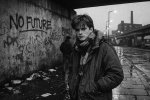
By Cerasus Poetry
- 235 reads
Winter arrived, sharp-edged and grey. Frost clung to the pavements and frozen puddles shone like thin films of glass. The bitter air smelled of coal smoke and diesel. The newspapers talked about the lorry drivers’ strike, while the television showed men in parkas huddled round braziers, stamping their feet against the cold. The country felt tired, waiting for something to change.
David sat at the kitchen table with a mug of tea and a pile of homework he wasn’t doing. His cheap Fidelity radio was tuned to Radio 1, from which the voice of Andy Peebles announced the number one single: Pink Floyd again. The bass line rolled out, heavy and hypnotic.
His mother looked up from ironing shirts and frowned. “That’s a miserable noise.”
“It’s brilliant,” David said.
“Sounds like a factory.”
He smiled. “That’s the point.”
*
School had broken up for Christmas, but the sixth-formers still hung around the town centre, killing time. The weather stayed cold, falling below zero at night and the streets remained slippery. The Theatre was showing an amateur production of Grease and the posters for Alien still clung to the wall outside the Odeon, their edges curling.
David met his friend Roger by the bus stop near the shopping precinct. Roger was seventeen, with a Saturday job at Rumbelows. He wore his hair long enough to annoy both his supervisor and his teachers. He had a transistor radio in his pocket, the aerial sticking up like a flagpole without a flag.
“Got any fags?” Roger asked.
David handed him one. They lit up, the smoke curling in the cold air.
“You going to the gig tonight?” Roger said.
“What gig?”
“Local band at the White Lion. They’re calling themselves The Static.”
David shrugged. “Might do.”
“Come on. Better than sitting at home.”
He thought of his father, asleep in the armchair by eight, the television flickering blue and hypnotic. “Yeah,” he said. “All right.”
*
The White Lion was half empty, its carpet sticky and the air thick with cigarette smoke. The band were loud but not much good; their guitars out of tune and drums too fast. Still, the noise felt alive. David stood near the back, pint in hand, watching the crowd. Most were older men in leather jackets, accompanied by women with feathered hair and shimmering blue eyelids.
Roger shouted over the music. “You could do this!”
David laughed. “I can’t play anything.”
“Doesn’t matter. Look at them!”
The singer yelled into the microphone, his voice cracking. A meagre array of lights flickered red and blue. For a moment, David felt something shift inside him: a vague sense of possibility, formless and uncertain.
After the gig, they walked home through the empty streets, their breath steaming in the cold air. The shops were dark, except where a few Christmas lights blinked weakly. A poster in a window read: THATCHER SAYS NO TO STRIKES. Someone had scrawled LIAR across it in marker pen.
Roger said, “You think she’ll last?”
David shrugged. “They all say the same things.”
*
Christmas approached with rain instead of snow. The pavements were slick, the neighbourhood smelled of overcooked Brussels sprouts. On television, The Good Life repeated again and Morecambe and Wise filled the evening with laughter that felt forced. The Daily Mirror ran stories about inflation and unemployment; the Sun promised victory over the unions.
David’s father worked at the car assembly plant. He came home late most evenings, his hands black with oil and face grey with exhaustion. “They’re talking redundancies,” he said one night, staring into his pint. “Whole sections.”
His mother said nothing, but took to hiding the newspaper and turning the gas fire down.
David watched them, feeling the silence settle like dust in a pharaoh’s tomb.
*
On Boxing Day, he met Clare at the bus stop. She was in his year at school; a quiet, and sharp-eyed girl who was always reading. She wore a long grey coat and a scarf that looked hand-knitted.
“Cold, isn’t it?” she said.
“Freezing.”
They walked to the park, where the grass was stiff with frost. The pond was half-frozen and the ducks huddled round its edge. She talked about university applications, about wanting to study art history in London. He only half listened, lost in the sound of her voice.
“You ever think about leaving?” she asked.
“Sometimes.”
“Where would you go?”
He looked at the frozen water. “Anywhere that isn’t here.”
She smiled. “That’s a start.”
*
New Year’s Eve brought fog: thick and yellow, clinging to the streetlights. The pubs were packed, the atmosphere heavy with Heineken and Hai Karate. David and Roger stood outside The White Lion, sharing a bottle of Woodpecker. The bells from the local church rang faintly through the mist.
Roger said, “Next year’s going to be different.”
“How?”
“Punk’s dead. Something new’s coming.”
David laughed. “You sound like Melody Maker.”
“Maybe I should write for them.”
Somewhere, a few fireworks fizzed and cracked, their flashes smothered by the mist.
*
January arrived, no less cold and grey. The school reopened, its corridors smelling of damp coats and disinfectant. The teachers looked tired; the students restless. The heating barely worked, so everyone wore their scarves and fingerless gloves indoors.
In English, Mr Henderson talked about Orwell. “Control,” he said, chalk squeaking on the board. “Language as power.”
Roger whispered, “He’s been listening to Pink Floyd.”
David grinned.
After class, Clare caught up with him. “You going to the cinema Friday?”
“What’s on?”
“Apocalypse Now,” she said. “At the Odeon.”
He hesitated. “Yeah. All right.”
*
Friday night, the cinema smelled of popcorn and damp wool. The posters outside showed Star Trek, Alien, Quadrophenia. Inside, the lights dimmed and the Vietnamese jungle filled the screen: helicopters, fire, music that shook their seats. David felt the noise in his chest, the chaos and horrific beauty of it.
Afterward, they walked home through streets that felt even colder, quieter, darker and more solid than usual.
Clare said, “It’s mad, isn’t it? All that destruction.”
“Yeah.”
“Do you think we’ll ever stop fighting?”
He shrugged. “Doesn’t look like it.”
She smiled sadly. “Maybe that’s the point.”
*
At home, his father sat in silence, the television showing news from Iran: hostages, protests, burning flags. “World’s gone mad,” he said at last.
His mother poured tea. “Always has been.”
David went upstairs and turned on his radio. The charts played: The Pretenders, Blondie, Pink Floyd still at number one. He lay on his bed, staring at the ceiling, the music filling the room. Outside, the wind rattled the window frame.
He thought of Clare, of the frozen pond, of locked factory gates, of burning trees. Everything felt connected and broken, all at once.
*
The following week, the snow finally fell: a thin swirl of flakes that melted as they touched the ground. The school playground turned to slush. The teachers’ complaints about the heating grew louder.
At lunch, Roger said, “You hear about the strike?”
“Which one?”
“Car workers. They’re walking out.”
David nodded. “Dad says it’s coming here too.”
Roger grinned. “Maybe we should join them.”
“Yeah, picket the school.”
“We don’t need no...” they started to intone together before breaking into laughter, though neither found it funny.
*
On Saturday, David took the train to London with Clare. The carriage smelled of damp coats and stale cigarette smoke. Outside, the suburbs slid past: terraced houses with forlorn looking back gardens, followed by derelict warehouses, stacks of rusting scrap and the looming skeletons of cranes.
They walked through Covent Garden, the air full of the sound of buskers and cries from market stalls. She bought a postcard of Turner’s Rain, Steam and Speed. “It’s beautiful,” she said.
He looked at the painting; at the blur of motion and sense of escape. “Yeah.”
They ate chips from a paper cone, standing under the awning of a closed shop. The rain came down in sheets, turning the pavement into a silvery rivulet.
“You ever think about the future?” she asked.
“Not really.”
“You should.”
He smiled. “Maybe I will.”
*
Back home, the news talked about inflation hitting twenty percent. The pound was falling, the government was promising restraint, while the unions were promising resistance. The television flickered with images of picket lines and snow-covered roads. David’s father sat in his armchair, staring at the screen, a pint glass balanced on his knee.
“Same old story,” he said. “They tell us to tighten our belts while they’re dining in Mayfair.”
His mother said quietly, “You’ll make yourself ill.”
He didn’t answer. The gas fire hissed, its orange flames flickering in the draught.
Upstairs, David turned on his radio. The charts were changing: The Pretenders climbing, Blondie still strong, Pink Floyd holding its place. He lay on his bed, listening to the hum of the electric heater, thinking of Clare in London, of the postcard she’d bought, of the train pulling away from the station.
*
The snow thickened overnight. By morning, the streets were white and silent. The school closed early and buses stopped running. David and Roger walked home through the crisp air, their boots crunching and breath steaming.
Roger said, “You reckon they’ll shut the factory?”
“Dad says maybe.”
“Bloody hell.”
They passed the park, the swings half-buried in a drift. A group of kids threw snowballs at the statue near the gate. Their laughter echoed through the cold air.
Roger said, “You ever think we’ll get out of this?”
“Out of what?”
“This. Town. Jobs. Same routine.”
David looked at the frozen pond. “Sometimes.”
Roger grinned. “We’ll start a band. That’ll do it.”
David laughed. “You can’t play anything.”
“Doesn’t matter. We’ll learn.”
The snow fell harder, covering their footprints.
*
That weekend, Clare came back from London. She called from the phone box near the station; the glass steaming up and the receiver cold against her ear.
“Meet me at the café,” she said.
The café smelled of fried bread and instant coffee. She sat by the window, coat unbuttoned and cheeks red from the cold. The large folder containing her portfolio covered most of the table
“How was it?” he asked.
“Busy. Loud. Brilliant.”
He smiled. “You’ll fit right in.”
She looked at him. “You could too.”
He shook his head. “I’ve got school. Dad’s job.”
“Those aren’t reasons.”
“They’re what’s here.”
She sighed. “You sound like everyone else.”
He smiled faintly. “Maybe I am.”
Outside, the snow began to melt, turning to slush along the kerb.
*
The following week, the factory announced layoffs. George came home early, his face grey and hands trembling slightly.
“They’re cutting two hundred,” he said. “Could be me.”
His mother poured tea and said nothing.
David sat at the table, the radio filling the silence with The Pretenders, Brass in Pocket. The song felt too big and bright for the room.
George said, “You stay in school. Don’t end up like me.”
David nodded, though he wasn’t sure it made any difference anymore.
*
By mid-January, the snow was completely gone. The pavements were wet and the air smelled of thawing earth. The chart rundown confirmed that Pink Floyd had finally dropped from number one. The world was moving on.
At school, Mr Henderson talked about Blake. “Rebellion,” he said. “Imagination against control.”
Roger whispered, “He’s still quoting Floyd.”
David smiled.
After class, Clare was waiting for him by the gate. “I’m going back to London next week,” she said. “Got a room near Camden.”
“That’s good.”
“You could visit.”
“Maybe.”
She looked at him. “You won’t, will you?”
He didn’t answer.
*
That evening, he walked home alone. The sky was low and grey, the streetlights flickering. The air smelled of rain and petrol. He passed the factory gates, where men were standing in small groups, their collars up and cigarettes glowing in the dusk.
At home, the television showed Nationwide, with Sue Lawley talking about unemployment figures. His father sat silent, staring at the screen. His mother folded laundry, the smell of cotton and steam filling the room.
David went upstairs and turned on his radio. Music invaded the room: The Clash , then The Jam, their voices raised in what sounded like defiance. He closed his eyes and listened passively.
Outside, the rain began to fall again, steady and cold.
*
On Saturday, he met Roger at the park. The grass was muddy; the pond thawed. They sat on a bench, sharing a cigarette.
Roger said, “You hear about Clare?”
“She’s gone.”
“London?”
“Yeah.”
Roger nodded. “Lucky.”
David looked at the water, at its flat reflection of the grey sky. “She’ll do all right.”
“You will too.”
He smiled. “Maybe.”
They sat in silence, their exhaled smoke drifting upward and disappearing into the damp air.
*
The winter lingered, dull and heavy. The headlines shifted from inflation and strikes to Iran and Afghanistan. The world felt more distant now.
At school, the teachers talked about exams. At home, the factory talked about closures. The radio played new songs: The Specials, The Police, The Pretenders again. The sounds were sharper now, faster and restless.
David walked through the town one evening, past shuttered shops and vandalised streetlights. The air smelled of chip fat and rain. He stopped outside Our Price, looking at the posters in the window: London Calling, The Wall, Regatta de Blanc. Each one felt like a door he hadn’t opened yet.
He thought of Clare, of London, of the train pulling away. He thought of his father’s hands, black with oil. He thought of the noise of the factory, the hum of the classroom, the music on the radio.
- Log in to post comments
Comments
So many familiar aspects of
So many familiar aspects of that time brought to life so vividly.
This is today's Facebook, X/Twitter and BlueSky Pick of the Day.
Congratulations.
[I couldn't validate the image you have used or find anything elsewhere comparable. I imagine it's your own work but if you could confirm here that would be great. Thanks again]
- Log in to post comments
Lovely writing, a pleasure to
Lovely writing, a pleasure to read.
hilary 
- Log in to post comments
grim but well written
Quite a vivid depiction of hopelessness, very well written. In 1979, I changed jobs and got 100% pay increase. I started working a swing shift that lasted 36 years. Then I retired, with full pension and social security; my 1979 was certainly different from this one. Thank God!
Good work Ray
- Log in to post comments