


III. The Body Box - Part Three

By SoulFire77
- 517 reads
The roads got smaller. County to rural. Rural to gravel. The gravel to a dirt track with grass growing in the center strip. The truck barely fit — branches scraping the mirrors on both sides, the headlights cutting a tunnel through trees that leaned in over the road like they were trying to touch above us.
Dawn was coming. I could feel it more than see it — a change in the quality of the dark, a thinning, the way you can feel the edge of shade on a summer day. The sky through the windshield was going from black to the blue that comes before the blue that comes before sunrise.
"Here," I said.
He stopped. The headlights hit a gate — chain-link, padlocked, the chain loose. Beyond the gate, a gravel lot. Beyond the lot, a building. Corrugated metal. No signage. One story, maybe forty feet by sixty feet, the proportions of a small warehouse or a machine shop. A roll-up door on the left. A regular door on the right. No windows. A security light on a pole in the lot, the kind with the orange sodium bulb, but the bulb was out or turned off and the light was dead.
It looked like nothing. It looked like every third building on every rural road in every county in the country — the place where someone fixes tractors or stores feed or parks equipment over the winter. You could drive past it a thousand times and never slow down. That was part of it. The ordinariness was part of it.
The gate. I'd been through that gate. The lock had a combination — four digits. I knew it. The information was in my body the way a phone number is in your fingers when you dial it without thinking. I couldn't have written the combination down. But my hands knew it. My hands knew a lot of things my mind had tried to forget and my mind had failed at the forgetting because the body doesn't forget, the body is a recording device that plays back without being asked.
I sat in the cab. Two minutes. I didn't talk. Gill didn't talk. The engine idled and the cab vibrated and the vibration was the last good thing, the last moving thing, the last thing that wasn't the building.
I reached down and took off my shoes. Sneakers. I'd gotten them from a donation bin at a church three days ago. They didn't fit right — half a size too big — but they were mine and they were the first thing I'd owned since the body box and I unlaced them carefully and I set them on the floor mat side by side with the laces tucked in and the tongues flat and I lined them up the way you line up shoes at the entrance of a house where they ask you to take your shoes off.
In the body box you don't wear shoes. The floor is smooth concrete and you feel it with your whole foot — the temperature, the texture, the slight grit where the pour wasn't perfect. Shoes are the first thing they take. Before your name, before your sense of time, before your understanding of how much space a person needs, they take your shoes. They take your shoes because shoes are how you walk out of a place, and the taking of the shoes tells your body that you are not going to walk out.
I took off my jacket. A man's windbreaker, also from the donation bin. I folded it and set it on the seat.
I straightened my hair. I pushed it behind my ears. I sat up straight and then I let my shoulders round and I let my head drop and I let my eyes find the floor and my hands find my lap and my knees find each other and the posture settled over me like a garment, like something I was putting on, and it fit, and the fitting was the horror, because it fit better than any posture I'd held since I'd gotten out. My body was more comfortable in the trained position than in any position the free world offered. The body box had taught my muscles a shape and the shape was permanent and the shape was: small. Take up the minimum of room. Be the dimensions. Be the box.
"Dina," Gill said. His voice was hoarse. "What do you want me to do?"
"Nothing."
"I can come with you."
"No. You can't. You're too big. You move wrong. You breathe too loud. You'd — you don't know how to move in there. The spaces are small. You have to move like the spaces are small or he knows. He can hear it. He can hear the difference between a body that's been trained and a body that hasn't. You walk too wide. Your feet are too heavy. You'd get her killed."
He looked at me. I could feel him looking at me and I didn't look back because I was already in the posture and the posture didn't include looking at men directly.
"If I'm not back in one hour," I said, "drive to the nearest town. Find a police station. Tell them this address." I gave it to him. I'd figured it out from the roads — the county, the number, the route we'd taken. He wrote it on a napkin. His hand was shaking.
"One hour," he said.
"One hour."
I opened the door. The air hit me. Cool, early morning, the smell of pine and gravel and dew on metal and something underneath — motor oil, maybe, or the particular smell of a building that doesn't ventilate. I knew that smell. The smell was inside me the way the combination was inside my hands.
I stepped down from the cab. The gravel was cold under my socks. Sharp. I could feel every stone through the cotton. The coldness traveled up through my feet and into my legs and the coldness was information and the information was: you are outside. You are standing in a gravel lot and the sky is above you and the sky is open and the open is vast and your body doesn't want the vast, your body wants the room, and you're going to give your body what it wants because the room is where the girl is and the girl is in stage one and stage one is the box and the box is exactly her size and someone measured her.
I walked toward the building. The posture carried me. My feet found the gravel and the gravel found the path and the path led to the door — the regular door, the one on the right, the one with the handle that you push, not pull, and the handle was cold and the cold was the same cold as every time and my hand was on the handle and I was pushing and the door opened because the door had never been locked from the outside, that was part of it too, the door was always open because the building didn't need to lock you in, the box locked you in, and by the time you got out of the box you didn't want to go through the door because the door led to the outside and the outside was too big and the too-big was what the training removed from you, inch by inch, until the box was the right size and everything else was wrong.
The hallway. Concrete floor. No light except what came through the door behind me. The air was warm. The heating system running through the slab, the same warmth I'd felt on my back for however many months I'd lain in the dark counting trays of food. The warmth came up through my socks and into the soles of my feet and my body recognized it the way you recognize the feeling of your own bed after a long trip — not with joy, not with relief, with the particular, terrible comfort of the familiar.
Behind me, the door was still open. The dawn light came through it in a gray wedge that reached halfway down the hall. In the lot, the Peterbilt idled. I could hear the engine. I could feel the vibration through the slab, faintly, the last thread connecting me to the truck and the road and the man with the thermos and the moving.
I could still go back. I could turn around and walk through the door and cross the gravel and climb into the cab and say drive and he would drive and the miles would accumulate and the building would shrink in the mirror and I would be in a moving thing and the moving thing would not be the body box.
The girl was below me. Down the stairs, second door on the left, the door with no handle on the inside. She was in the dark. She was lying on a warm floor. She was counting trays or heartbeats or the sound of the ventilation or nothing at all because the nothing had already started and the nothing was the training and the training was working because the training always worked, it worked on every woman he put in the box, it worked on me.
I stepped forward. My feet were silent on the concrete. The trained feet. The quiet feet. The feet that knew how to move through this building without making a sound because making a sound was the one thing you learned never to do in here — sound drew attention and attention was a door opening and a pair of work boots standing in the doorway and the silence that belonged to him.
I walked down the hall. The door behind me was still open.
I didn't look back.
I reached the stairs. Concrete. Narrow. The same warm slab. I could hear the generator now — that low vibration, the one that came through the walls and the floor and into your body and lived in your teeth. I went down the stairs and the light from the door above me thinned and thinned and by the time I reached the bottom step the light was gone and the dark was the dark I knew and my body moved through it without hesitation because my body had mapped this building in the dark hundreds of times and the map was in my feet and my hands and the walls I could feel without touching and the distances I knew without counting.
The second door on the left. I stopped. I put my hand on the door. The metal was warm. Behind it, the faintest sound — breathing. Not his breathing. Lighter. Faster. The breathing of someone who was awake in the dark and afraid and counting something, anything, trying to hold onto the last thing the dark hadn't taken.
I pulled the door open.
Inside: the box. I couldn't see it but I could feel it — the dimensions of the room pressing against my skin the way water presses against you when you're submerged, the close warm dark that was exactly one person wide and one person long and eighteen inches tall. And in the box, the sound of the breathing going fast, going ragged, the sound of a girl who'd heard the door open and didn't know if the door was the boots or the food or something else, something she hadn't been taught to expect yet.
I knelt. I put my mouth close to the wall of the box. I said the thing I'd come to say. The thing nobody said to me. The thing that would have changed everything if someone had said it to me in the first week, before the counting stopped, before the dark became the right size, before my body learned to prefer the room.
"I'm going to get you out," I said. "You're going to hear sounds. Don't make a sound. Do what I say. We're going to move fast and we're going to move quiet and you're going to want to run and I need you not to run because running makes noise and noise is the thing that will stop us. Do you understand?"
The breathing paused. One second. Two.
"Do you understand?"
"Yes." The voice was small and it was young and it was the voice of a person speaking for the first time in days and the word came out broken, split in the middle, the Y and the S separated by a gap where the voice had to remember how to work.
I opened the box.
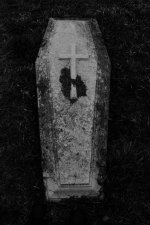
Behind me, upstairs, through the hallway, through the door I'd left open, in a gravel lot with the security light dead and the dawn coming gray through the pines — the Peterbilt idled. Gill sat in the cab. On the floor mat, a pair of sneakers from a church donation bin, half a size too big, lined up with the laces tucked in and the tongues flat. The shoes of a woman who had taken them off because in the body box you don't wear shoes, and who had walked into the building in her socks to get a girl out of a room the size of a coffin, and who had left the shoes in the truck because the shoes were the part of her that was still outside.
The engine idled. The sun came up. The corrugated metal caught the first light and went from gray to orange and held the orange for thirty seconds and then let it go.
The door of the building was still open.
The shoes were on the mat.
— end —
- Log in to post comments
Comments
A tense and compelling read
A tense and compelling read which kept my attention right to the end - thank you!
- Log in to post comments
Cracking story. Enjoyed all
Cracking story. Enjoyed all three parts. Classically Russian Doll in its conception.
- Log in to post comments