


Amanderellaand the Punctual Ghost Chapter 1.

By Eric Marsh
- 368 reads
Amanderella and the Punctual Ghost.
Chapter 1.
Boddals House.
Boddals House was a tall grey stone building just below the crest of the hill above Nether Bramblewick. It wasn’t grand, but it had clearly been more important once. Most of the land that went with it had long since been sold, leaving the house with only its garden and a small paddock. It looked respectable enough, just a little bit grander than it ought to be with what remained around it.
The house had been rebuilt about a century earlier on the foundations of a much older farmhouse. The old place had been pulled down when the family still owned most of the hillside, and the new house put up in its stead. A few of the original features remained, a blocked‑up well in the back corner of the garden, and the odd thickness of the kitchen wall where an outbuilding had once joined on.
The crest of the hill sheltered the house from the winds that swept across the moors behind it, so that Boddals House stood in a small pocket of calm even on blustery days.
No one really knew where the name came from; no family called Boddal had ever lived there, and the parish records were no help. It was simply “The Boddals”, and villagers spoke of it with a shrug, as if it had always been there.
The present family were the Wocal‑Eardews. Dr Osric Wocal‑Eardew was the head of the household, though no one would have guessed it from the way he drifted about the place. Retirement from his long years in charge of the City Museum had given him more time for his favourite occupation: forming elaborate theories about Roman roads, ancient trackways, and the half‑forgotten routes he was certain lay beneath the modern lanes. He could often be found standing in the paddock with a notebook, staring at a hedge as if it were about to confess something.
He was absent‑minded in the mild, incurious way that caused no trouble. If he misplaced his spectacles, he simply assumed that one of the family had moved them. If he forgot what he had gone into a room for, he merely turned round and went back out again.
His absent‑mindedness caused little difficulty when he was out on the moors, following whichever track he believed he had found. If he met anyone, he would stand quite happily and talk about the Romans and the roads they had built across the hills. The villagers found this harmless enough and let him talk; it was easier than arguing.
Honoria, his wife of many years, kept the place running with a calm, practised ease, that villagers admired from a distance. She was not unkind, simply brisk, and had the air of someone who always knew what ought to be done next. In the village she was a steady presence on every committee worth having, and the annual plant show would have collapsed years ago without her. Her dahlias were spoken of with respect, and her jam‑making had won so many prizes that she no longer bothered to display them.
She managed these things without fuss, as if they were no more than the natural order of life. People said she had a gift for getting others to do what was needed without their realising they had been directed. It was not authority exactly, but something quieter and more effective.
She was the kind of person who, whilst never taking the Chair at a meeting, was always the one people looked to for guidance.
Their daughter, Cassiana, who was forty‑five and as much a part of the house as the grey stone walls. She dressed in sensible tweeds and always wore a single string of pearls that had belonged to her grandmother. She lived quietly at home and saw no reason to be anywhere else. She was a practical woman with steady habits, the sort who kept lists in a small notebook and could tell you exactly where the spare candles were kept. In the village she was known for her reliability rather than her sparkle, which suited her well enough.
She helped her mother with the plant show, took minutes at meetings when asked, and managed the household accounts with a neat, upright hand. People spoke of her kindly, though without much curiosity; she had been part of the background of village life for so long that no one could quite remember a time when she hadn’t been there.
Avarine Wocal‑Eardew, a cousin of about five‑and‑twenty, was staying with them for the summer. She had come down from the city for a change of air, and because Honoria felt it did young women good to spend a few months somewhere quieter. Avarine was pleasant‑mannered and neatly turned out, with the self‑possession of someone who had been brought up to behave correctly in any drawing room. She took her place in the household without difficulty, helping where she could and keeping out of the way where she could not.
The villagers approved of her in a mild, general way. She walked into the village most afternoons, nodded politely to those she passed, and bought small things from the shops as if to show willing. No one knew much about her, but she gave no cause for comment, which in Nether Bramblewick was almost as good as being admired.
Lucian Wocal‑Eardew, a young cousin of about the same age as Avarine, was also staying for the summer. He was an earnest, rational sort of young man, inclined to think matters through twice before speaking once, and yet slightly nervous in company, as if he feared he might say the wrong thing by accident. He had come down from his clerkship in the city for a few months’ rest, though he insisted he was not tired, merely “between responsibilities”.
He fitted into the household in a quiet, unobtrusive way, taking his meals when they were offered and retreating to the garden with a book when the house grew busy. Honoria approved of him because he was tidy; Osric liked him because he listened politely to talk of Roman roads; and Cassiana found him useful for carrying chairs. Avarine treated him with cousinly patience, which he accepted with relief.
Although the household was full for the summer, there was still room for one more regular visitor. Every evening, at precisely the same moment, a faint whooshing sound travelled along the back passage, followed by what might have been footsteps on the flagged floor. No one had ever seen anything, but the noise arrived with such punctuality that as matter-of-factly as if it were a ticking clock, as ‘the ghost’.
Honoria dismissed it as a draught, though she could never find the source. Cassiana said it was the kitchen chimney settling. Osric believed it marked the line of an ancient trackway and was rather pleased about it. Avarine tried not to look startled when it happened, and Lucian grew tense in the five minutes beforehand, as if bracing for an examination. The villagers, who had heard rumours, merely nodded and said that The Boddals had always had its ways.
It was harmless enough, but its regularity gave it a certain authority, and even Honoria admitted that it was odd for a draught to keep such reliable hours. The house stood calm under the long afternoons, its people moving through their days with the steadiness Nether Bramblewick expected of them. Even the ghost kept to its timetable. It was all very peaceful,
- Log in to post comments
Comments
We Northerners like our wilds
We Northerners like our wilds! I can't wait to find out more about the Punctual Ghost.
A couple of little typos:
Their daughter, Cassiana, who was forty‑five and as much a part of the house as the grey stone walls. - the 'who' seems a bit out of place.
No one had ever seen anything, but the noise arrived with such punctuality that as matter-of-factly as if it were a ticking clock, as ‘the ghost’ - wondering if it should be an 'it was known as...'
That's it from Pedant's Corner!
- Log in to post comments
Very glad to see another one
Very glad to see another one of these - thank you Eric
- Log in to post comments
Pick of the Day
This is our hugely enjoyable Pick of the Day! Congratulations!
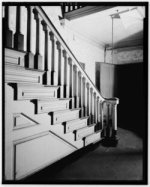
Picture by Arthur Cushman Haskell, free to use at Wikimedia Commons: https://tinyurl.com/49jvmjpk
- Log in to post comments